As a poet, learning copyediting has been very helpful to me. When it comes to formatting, for the most part, poets have the creative liberty to do whatever they please. Before learning copyediting and other processing techniques used in publishing, I believed that to an extreme—putting in all sorts of strange punctuation and stanza breaks just to do so. As an editor, I cringe at that now. Not only for my lack of good reason, but also because I’ve now had to read piles upon piles of poetry, and those pieces with a ton of confusing spacing or punctuation marks are the spark of countless arguments between editors as we try to find out what is intentional, a processing error, or a simple mistake! In the early stages of acquisitions this can be solved through a simple message or email, but when we’re further along in our publishing process and working on copyediting there often simply isn’t enough time to have conversations with our authors.
Working as a copyeditor has helped me better prepare for submitting my poetry for publication and is helping me write my poetry more efficiently and concisely as well.
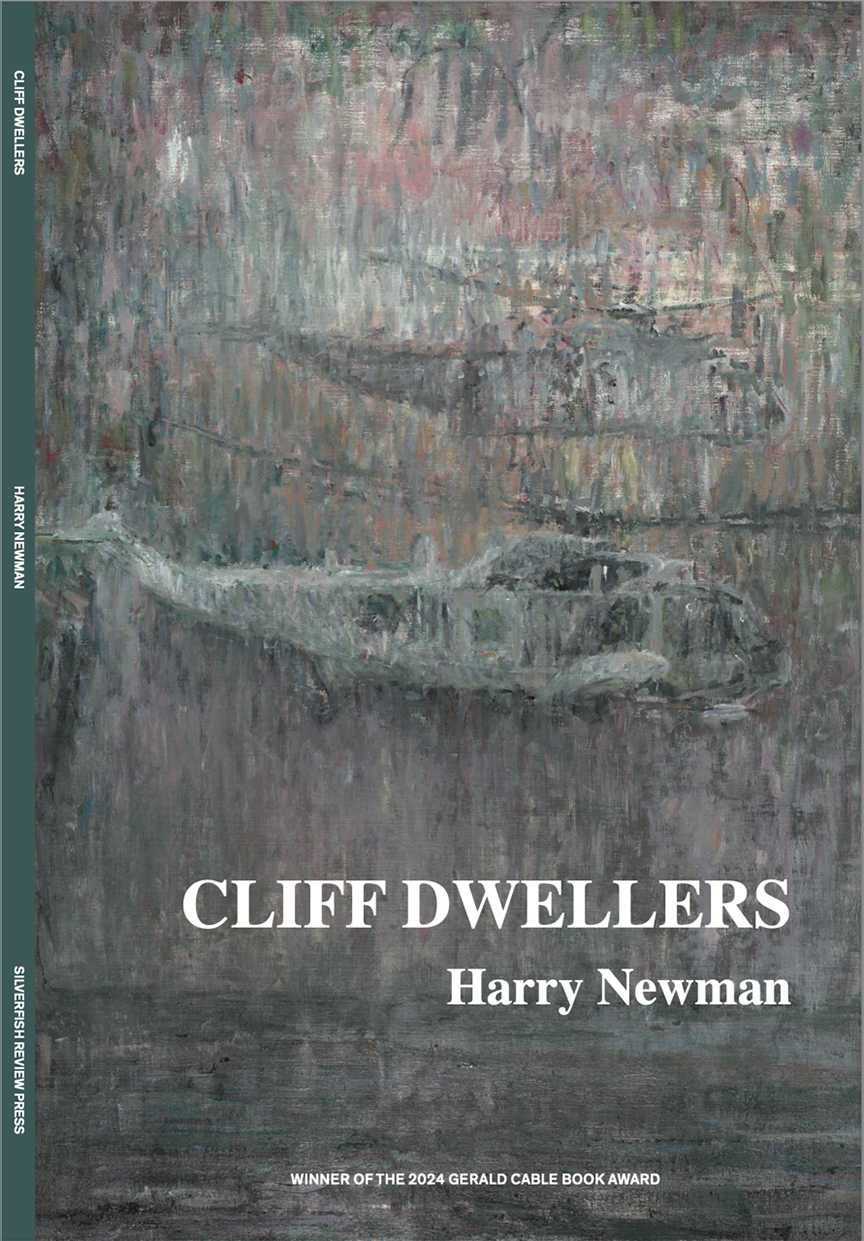
Congratulations to Harry Newman on the cover reveal for his upcoming collection, Cliff Dwellers, from Silverfish Review Press. The painting by Sabine Moritz is titled Abendphantasie. Beautiful work!
Congratulations to CLR contributor Matthew James Friday on the recent publication of two new poetry chap books by Bottlecap Press: Strange BeautyandThe Be-All and the End-All!
So many thanks to all the amazing poets and writers for sharing your work during this year’s submission period. Our window closed yesterday—with over 560 submissions!! WOW!!! Our reading period begins next week, and there is yet another incredible group of student editors ready to learn all about publishing by doing the hard work to publish the next volume of our beloved literary journal—and our 30th issue!
Step 1: A poet submits his work. In September of 2022, Steve Deutsch submitted his poem, “Looking for America,” for consideration of publication in volume XXVII of the Clackamas Literary Review (CLR). Steve is the poetry editor of Centered Magazine and was the first poet-in-residence at Bellefonte Art Museum in Pennsylvania. He’s been nominated for the Pushcart Prize multiple times and won the Sinclair Poetry Prize for his full-length book, Brooklyn.
Step 2: Student editors select Steve’s poem for publication. Students enrolled in one of the English Department’s book publishing course offerings at Clackamas Community College in Oregon City, OR, who were learning all about publishing by working as assistant editors to publish the next volume of the award-winning and internationally-read Clackamas Literary Review, read, discussed at length, and were thrilled to acquire “Looking for America” for publication.
Step 3: A composer from the San Francisco Bay Area discovers Steve’s poem in the CLR. Martin Rokeach, a professional composer who had been commissioned by conductor Bruce Koliha to write a piece for chorus, had been searching for just the right poem—scouring the internet, visiting used book stores—to set to music. He had read over 200 poems and was coming up short. And then Dennis Lum, whose poems “Milky Way” and “The Answer Is No” were published in the same issue as “Looking for America,” and who happened to be Martin’s cousin-in-law, sent a copy of the CLR to his family to read. In Martin’s words, “I at last found what I needed in Steve’s ‘Looking for America.’” Martin reached out to the CLR’s managing editor about connecting with Steve regarding the exciting opportunity. The editor connected composer with poet, and the rest is, as they say, history.
Step 4: Composer sets poem to music. Martin wrote the music, to be performed by the San Ramon Valley Chorale, renaming it “Remembering We’re Alive.” It premiered in April 2025, nearly two years after the poem was first published in the CLR.
Step 5: Choral work wins a national music prize. Sacramento State’s Festival of New American Music, which received more than 230 submissions in four categories, selected only one choral work in the choir category. You guessed it: “Remembering We’re Alive.”
See how that works?
“Remembering We’re Alive,” adapted from Steve Deutsch’s poem “Looking for America,” originally published in volume XXVII of the Clackamas Literary Review and set to music by Martin Rokeach, will be performed November 2nd, 2025 at Sacramento State’s annual music festival.
“Looking for America,” by Steve Deutsch
Let us be best friends one last time—
roll out the old Ford and take
that trip we so often dreamed of
when young. Head to the west coast
on those two lane roads that once were America.
Remember when we were America too?
Fill that old Ford with chips and beer—
the radio set to the “Nothing but Oldies” Station,
loud enough to remind us we are still alive.
Swap lies with the locals in pubs on Main Street
and sample the biscuits and bacon in dozens of mom
and pop diners in what was once the heartland—
a thousand dots on a tattered gas station map
long ago bypassed and nearly forgotten.
And when the Ford throws a rod
in Kansas or Colorado, as of course
it must, we can unfold the aluminum
lawn chairs and sit on the berm to wait for the sunset.
Congratulations to Harry Newman, author of the excellent poem “Back” (CLR, 20th Anniversary Issue), on his first full-length poetry collection, Cliff Dwellers, winning the Gerald Cable Book Award! The book is scheduled for release August 15th, 2026, by Silverfish Review Press. Check it out!
“Regarding the bathroom: The description is so vivid. What bathroom was this based on?”
The bathroom in the first section is from my childhood home. The turquoise bathroom in the other sections is in the house where I live now, so I use it every day. The previous owners were very fond of color, so I have a turquoise bathroom and a pink one. The living room was green, and the kitchen was purple when I moved in. I painted the kitchen white but kept the other colors.
“What inspired you to tell a life story through the aging and evolution of a bathroom?”
We had a prompt in a workshop to talk about a room and color. I had been thinking about having the bathroom repainted, so it was on my mind. Then I remembered the sky blue bathroom back home and lines started coming to me for this poem. We spend an awful lot of time in the bathroom but rarely talk about it and certainly don’t write poems about it. There are stories there if we look.
“In the third and fourth cantos, the woman seems quite lonely. How do you envision the woman spending her Christmas Eve?”
She is lonely without her husband. I envision her going to Mass on Christmas Eve, then spending the rest of the holiday alone by the little Christmas tree she put up herself. You’d be surprised at how many widows find themselves in this situation.
“What brought you to write about bears in enclosures specifically?”
On a visit to Sitka, Alaska, I went to the Fortress of the Bears. These were bears that would never be released back into the wild. As with any captive animals, there is a sadness. As a young child I certainly never saw it that way. But that visit triggered memories of going to the zoo and seeing that particular bear and it was striking how I felt about it so many years later.
“Seeing the first couple of stanzas, are you experienced with bears in any way? If so, how?”
When my husband was battling cancer, friends sent us tiny Zuni bears that became tokens for us – we would take them to hospital visits. We began to get more bear items so now I have many bears in the house and as my husband passed away, they are a sweet reminder of him. I’ve been lucky enough to see bears in the wild twice – never in a dangerous situation.
“Why did you choose to write “Bears” as a poem and not a short story?”
Although I do write short fiction, I am primarily a poet and it was a natural inclination to approach this topic through a poem, distilling the various influences of bears while exploring their emotional resonance.



 CLACKAMAS LITERARY REVIEW