For me the two best sources of inspiration are reading and walking. I find that, especially when I’m struggling to write, it’s a good idea to just cram a ton of other people’s writing into my head and hope it sparks something. It doesn’t have to be poetry or literature, either. I just a read a bunch of stuff about televised Senate hearings in the 1950s and somehow even that started to get some gears turning. Then I like to go for long walks with my dog and just let my mind wander as we go. It’s a great feeling to come home excited to write.
-Ben Fowlkes, “The Rest,” Volume XXX, 2026
I look to people. Even the most trivial conversation with a stranger might inspire a scene in a novel or story. Although nothing is ever trivial to me.
-Grace Whitmore, “Beyond the Haze,” Volume XXX, 2026
Family!
-Celia Lawren, “The Problem of Describing Color,” Volume XXX, 2026
Whenever I’m stuck in my writing, I pick up a book and read.
-Joshua Zeitler, “Anna No, Anna No,” Volume XXX, 2026
Author of “Letter to You Beginning at a Dead Lake,” Volume XXX, 2026
When did you realize you wanted to write?
Pretty early in high school I started to write in a notebook. It started by trying to write a song, and I found it so difficult. I remember sitting there for hours and never finishing it. The difficulty of trying to translate my thoughts into words fascinated me and that never went away. My childhood was complicated, so trying to make sense of that through writing (whether that writing was fiction or nonfiction) helped me sort through events and moments I needed to reflect on. It’s that difficult translation between thought and words on the page that’s very interesting, and I don’t think I would find so much joy through writing if it was easy.
Is what you write now the same as what you wanted to write when you started?
In a sense, yes, but it’s so much more nuanced than how I started. I didn’t start by wanting to write about any specific thing other than my life and questions that simply came up by living. That has never changed. My understanding of poetry, the books I’ve read, and the writers I’ve studied with, or have become friends with, all have deepened my process, which is completely different than how I started.
How does using technology—Instagram, Twitter, Facebook, or even just your phone—influence how you write?
Technology mostly has a negative impact on my writing. The positives are obvious. It’s nice to be friends with a lot of great writers through social media. You can talk to them. You can see what their latest works are and read them before they come out in book form. All of that is very interesting, and given so many of these people do not live where I live, feeling “connected” to them in some way is great. It’s also nice to be writing and realize you want to research something, so having the ability to look things up is helpful. That said, technology is powerful distraction, and writing is about attention. Studies suggest that it takes 10-20 minutes to get into a creative mindset, and when we consistently stop working to check our phones, we pull ourselves out of that creative mindset. It then takes another 10-20 minutes to get back into that head space, but most people check their phones every 5-10 minutes, so do that math. We also have this false believe in our abilities to multitask, which isn’t real. What we call multitasking is really splitting our attention. You stop doing one task to do another. You can’t write a good poem and read your phone in the exact same moment. You do one thing, and then stop and do another. It’s never at the same time. Also, reading on a screen is dreadful. I retain half as much as I would from reading a hardcopy. On top of all this, we live in an attention economy, and many of the tech bros who profit from that are not good human beings, so disconnecting from that world is an intentional choice that we all need to make more often. Unfortunately, promoting yourself is difficult to do, and phone addiction is a real thing, but social media gives you the ability to share work that’s been published and promote your books. It’s a difficult thing to manage. The positives are there, but the negatives are extreme.
What advice would you give an aspiring writer who wants to put their work “out there“?
There is your writing process and what you create, and then there is publishing and self-promotion. They are not the same thing. In fact, trying to get out there and promoting yourself, takes time away from creating. It’s important to see these things as distinctly different. The most important thing you can do as an aspiring writer is develop a love for the process of writing. There is nothing more important, in my mind, than that. If you develop a love for the process, you will love to write. All creatives need to put in a lot of time and attention to work on their craft. It takes years, but after that time, the growth will be obvious, and then getting it “out there” is much easier. But don’t be in a rush. You’re only competing against yourself. After that time where you do a lot of work, you need to work on learning the literary magazine market and presses. This too will take time. Ask friends what journals they like. Go to book fairs with small presses and journals. Go to journal reading launch parties. Buy sample copies. Follow journals and presses online and see what sort of work they promote. Always remember, you can’t give a journal the ability to say yes to your work without giving them the ability to reject you. See rejection as a path towards acceptance. Rejection can be discouraging, but all writers go through it.
Where do you typically seek inspiration and guidance for your work?
I don’t seek inspiration. Life just happens and poems drift your way if you’re paying attention. You just pluck them out of the sky or pick them off the sidewalk, and if you don’t grab them as they go by, well, then Ocean Vuong gets them.
How do you manage writer’s block?
I don’t have writers block as much as I have moments when what I’m writing isn’t living up to my expectations. You just have to write your way through those moments. Again, you need to fall in love with the process, and that often involves working on writing that may not appear in your next book or get published in a journal. But that doesn’t matter. What matters is that you’re writing, and you know that not all of it is going to be your best work. But you have to trust that working through those not-so-great poems or stories will lead you to the next thing and the next.
As a poet, learning copyediting has been very helpful to me. When it comes to formatting, for the most part, poets have the creative liberty to do whatever they please. Before learning copyediting and other processing techniques used in publishing, I believed that to an extreme—putting in all sorts of strange punctuation and stanza breaks just to do so. As an editor, I cringe at that now. Not only for my lack of good reason, but also because I’ve now had to read piles upon piles of poetry, and those pieces with a ton of confusing spacing or punctuation marks are the spark of countless arguments between editors as we try to find out what is intentional, a processing error, or a simple mistake! In the early stages of acquisitions this can be solved through a simple message or email, but when we’re further along in our publishing process and working on copyediting there often simply isn’t enough time to have conversations with our authors.
Working as a copyeditor has helped me better prepare for submitting my poetry for publication and is helping me write my poetry more efficiently and concisely as well.
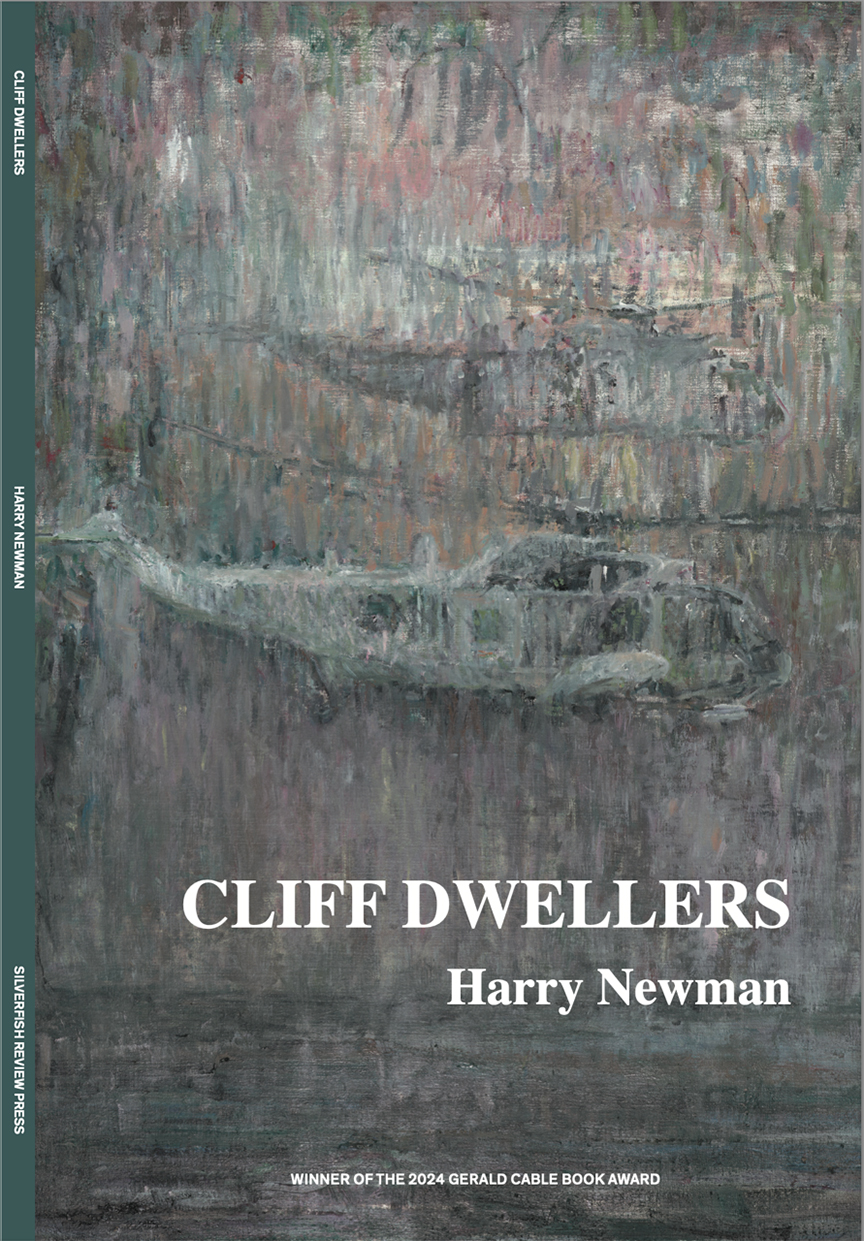
Congratulations to Harry Newman on the cover reveal for his upcoming collection, Cliff Dwellers, from Silverfish Review Press. The painting by Sabine Moritz is titled Abendphantasie. Beautiful work!
Congratulations to CLR contributor Matthew James Friday on the recent publication of two new poetry chap books by Bottlecap Press: Strange BeautyandThe Be-All and the End-All!
So many thanks to all the amazing poets and writers for sharing your work during this year’s submission period. Our window closed yesterday—with over 560 submissions!! WOW!!! Our reading period begins next week, and there is yet another incredible group of student editors ready to learn all about publishing by doing the hard work to publish the next volume of our beloved literary journal—and our 30th issue!
Step 1: A poet submits his work. In September of 2022, Steve Deutsch submitted his poem, “Looking for America,” for consideration of publication in volume XXVII of the Clackamas Literary Review (CLR). Steve is the poetry editor of Centered Magazine and was the first poet-in-residence at Bellefonte Art Museum in Pennsylvania. He’s been nominated for the Pushcart Prize multiple times and won the Sinclair Poetry Prize for his full-length book, Brooklyn.
Step 2: Student editors select Steve’s poem for publication. Students enrolled in one of the English Department’s book publishing course offerings at Clackamas Community College in Oregon City, OR, who were learning all about publishing by working as assistant editors to publish the next volume of the award-winning and internationally-read Clackamas Literary Review, read, discussed at length, and were thrilled to acquire “Looking for America” for publication.
Step 3: A composer from the San Francisco Bay Area discovers Steve’s poem in the CLR. Martin Rokeach, a professional composer who had been commissioned by conductor Bruce Koliha to write a piece for chorus, had been searching for just the right poem—scouring the internet, visiting used book stores—to set to music. He had read over 200 poems and was coming up short. And then Dennis Lum, whose poems “Milky Way” and “The Answer Is No” were published in the same issue as “Looking for America,” and who happened to be Martin’s cousin-in-law, sent a copy of the CLR to his family to read. In Martin’s words, “I at last found what I needed in Steve’s ‘Looking for America.’” Martin reached out to the CLR’s managing editor about connecting with Steve regarding the exciting opportunity. The editor connected composer with poet, and the rest is, as they say, history.
Step 4: Composer sets poem to music. Martin wrote the music, to be performed by the San Ramon Valley Chorale, renaming it “Remembering We’re Alive.” It premiered in April 2025, nearly two years after the poem was first published in the CLR.
Step 5: Choral work wins a national music prize. Sacramento State’s Festival of New American Music, which received more than 230 submissions in four categories, selected only one choral work in the choir category. You guessed it: “Remembering We’re Alive.”
See how that works?
“Remembering We’re Alive,” adapted from Steve Deutsch’s poem “Looking for America,” originally published in volume XXVII of the Clackamas Literary Review and set to music by Martin Rokeach, will be performed November 2nd, 2025 at Sacramento State’s annual music festival.
“Looking for America,” by Steve Deutsch
Let us be best friends one last time—
roll out the old Ford and take
that trip we so often dreamed of
when young. Head to the west coast
on those two lane roads that once were America.
Remember when we were America too?
Fill that old Ford with chips and beer—
the radio set to the “Nothing but Oldies” Station,
loud enough to remind us we are still alive.
Swap lies with the locals in pubs on Main Street
and sample the biscuits and bacon in dozens of mom
and pop diners in what was once the heartland—
a thousand dots on a tattered gas station map
long ago bypassed and nearly forgotten.
And when the Ford throws a rod
in Kansas or Colorado, as of course
it must, we can unfold the aluminum
lawn chairs and sit on the berm to wait for the sunset.
Congratulations to Harry Newman, author of the excellent poem “Back” (CLR, 20th Anniversary Issue), on his first full-length poetry collection, Cliff Dwellers, winning the Gerald Cable Book Award! The book is scheduled for release August 15th, 2026, by Silverfish Review Press. Check it out!