How do you go from a student-run lit. mag. to a national music prize? In just five easy steps:

Step 1: A poet submits his work. In September of 2022, Steve Deutsch submitted his poem, “Looking for America,” for consideration of publication in volume XXVII of the Clackamas Literary Review (CLR). Steve is the poetry editor of Centered Magazine and was the first poet-in-residence at Bellefonte Art Museum in Pennsylvania. He’s been nominated for the Pushcart Prize multiple times and won the Sinclair Poetry Prize for his full-length book, Brooklyn.

Step 2: Student editors select Steve’s poem for publication. Students enrolled in one of the English Department’s book publishing course offerings at Clackamas Community College in Oregon City, OR, who were learning all about publishing by working as assistant editors to publish the next volume of the award-winning and internationally-read Clackamas Literary Review, read, discussed at length, and were thrilled to acquire “Looking for America” for publication.

Step 3: A composer from the San Francisco Bay Area discovers Steve’s poem in the CLR. Martin Rokeach, a professional composer who had been commissioned by conductor Bruce Koliha to write a piece for chorus, had been searching for just the right poem—scouring the internet, visiting used book stores—to set to music. He had read over 200 poems and was coming up short. And then Dennis Lum, whose poems “Milky Way” and “The Answer Is No” were published in the same issue as “Looking for America,” and who happened to be Martin’s cousin-in-law, sent a copy of the CLR to his family to read. In Martin’s words, “I at last found what I needed in Steve’s ‘Looking for America.’” Martin reached out to the CLR’s managing editor about connecting with Steve regarding the exciting opportunity. The editor connected composer with poet, and the rest is, as they say, history.

Step 4: Composer sets poem to music. Martin wrote the music, to be performed by the San Ramon Valley Chorale, renaming it “Remembering We’re Alive.” It premiered in April 2025, nearly two years after the poem was first published in the CLR.

Step 5: Choral work wins a national music prize. Sacramento State’s Festival of New American Music, which received more than 230 submissions in four categories, selected only one choral work in the choir category. You guessed it: “Remembering We’re Alive.”

See how that works?

“Remembering We’re Alive,” adapted from Steve Deutsch’s poem “Looking for America,” originally published in volume XXVII of the Clackamas Literary Review and set to music by Martin Rokeach, will be performed November 2nd, 2025 at Sacramento State’s annual music festival.

“Looking for America,” by Steve Deutsch

Let us be
best friends
one last time—

roll out the old
Ford
and take

that trip
we so often
dreamed of

when young.
Head to
the west coast

on those two lane
roads that once
were America.

Remember
when we were
America too?

Fill that old
Ford with
chips and beer—

the radio set
to the “Nothing
but Oldies” Station,

loud enough
to remind us
we are still alive.

Swap lies
with the locals
in pubs on Main Street

and sample
the biscuits and bacon
in dozens of mom

and pop diners
in what was once
the heartland—

a thousand dots
on a tattered
gas station map

long ago
bypassed
and nearly forgotten.

And when
the Ford
throws a rod

in Kansas
or Colorado,
as of course

it must,
we can unfold
the aluminum

lawn chairs
and sit on the berm
to wait for the sunset.

Interview with Sue Fagalde Lick

Author of “Turquoise” (Volume XXVI, 2022)

“Regarding the bathroom: The description is so vivid. What bathroom was this based on?”

The bathroom in the first section is from my childhood home. The turquoise bathroom in the other sections is in the house where I live now, so I use it every day. The previous owners were very fond of color, so I have a turquoise bathroom and a pink one. The living room was green, and the kitchen was purple when I moved in. I painted the kitchen white but kept the other colors.

“What inspired you to tell a life story through the aging and evolution of a bathroom?”

We had a prompt in a workshop to talk about a room and color. I had been thinking about having the bathroom repainted, so it was on my mind. Then I remembered the sky blue bathroom back home and lines started coming to me for this poem. We spend an awful lot of time in the bathroom but rarely talk about it and certainly don’t write poems about it. There are stories there if we look.

“In the third and fourth cantos, the woman seems quite lonely. How do you envision the woman spending her Christmas Eve?”

She is lonely without her husband. I envision her going to Mass on Christmas Eve, then spending the rest of the holiday alone by the little Christmas tree she put up herself. You’d be surprised at how many widows find themselves in this situation.

Interview with Mercedes Lawry

Author of “Bears” (Volume XXVI, 2022)

“What brought you to write about bears in enclosures specifically?”

On a visit to Sitka, Alaska, I went to the Fortress of the Bears. These were bears that would never be released back into the wild. As with any captive animals, there is a sadness. As a young child I certainly never saw it that way. But that visit triggered memories of going to the zoo and seeing that particular bear and it was striking how I felt about it so many years later.

“Seeing the first couple of stanzas, are you experienced with bears in any way? If so, how?”

When my husband was battling cancer, friends sent us tiny Zuni bears that became tokens for us – we would take them to hospital visits. We began to get more bear items so now I have many bears in the house and as my husband passed away, they are a sweet reminder of him. I’ve been lucky enough to see bears in the wild twice – never in a dangerous situation.

“Why did you choose to write “Bears” as a poem and not a short story?”

Although I do write short fiction, I am primarily a poet and it was a natural inclination to approach this topic through a poem, distilling the various influences of bears while exploring their emotional resonance.

Interview with Cecil Morris

Author of “One Woman” (Volume XXVI, 2022)

“Could you tell us who inspired the character in this poem?”

My son was shooting wedding photos for a friend of his wife’s family in Cathedral Park under the St. John’s Bridge in Portland, and I had come along as an equipment carrier and back-up photographer. At least two other photographers were at the park shooting portraits (one of another wedding couple and one of a high school senior). Not a native Portlander, I had never been to Cathedral Park and was struck by the beauty of the scene and the brides. I began to imagine how the mother of a daughter or daughters might view the scene, so the “one woman” of the poem is mostly imaginary.

Being a poet of a certain age, I often think of my own receding and my own children having outgrown me and surpassed me in accomplishments. So I thought about how a woman might think of herself on that bridge suspended between (first) her life as young bride and new mother and (later but not that much later) the mother of brides.

“Why did you choose to keep your poem in one long stanza instead of breaking it up?”

I kept the poem as a single stanza because life–especially for this “one woman”–is a single short bridge from past to future. I think this might be a projection of my own experience of parenthood. It all went by so fast. Presto change-o from baby to toddler to teen to married and gone.

Author Insight: How do you deal with writer’s block? Do you have any unique rituals you do to keep writing and meet deadlines?

Though I am hesitant to use the word ‘writer’s block’ (especially in the world of creative nonfiction and poetry, where memory and experience are never-ending writing material; Example: any moment from your childhood) I truly believe that reading is the best cure for a creative stall. Read anything; read everything. And most importantly, read for enjoyment. You can’t read a book intending to find a cure for your block. It will ruin the book and you won’t find what you’re looking for. You’re writing will most likely be tainted. Instead, read and allow your mind to rest, to learn from and enjoy the way words dance on the page. In my experience, your next idea will just come to you, as long as you allow it.

-Darius Atefat-Peckham, 20th Anniversary Issue

How do I deal with writer’s block? Badly, of course. It’s terrible and the doubt and frustration from it only make it worse. But I don’t exactly have trouble writing, the times I’ve stopped. It’s more that I have trouble feeling. Feeling deeply enough to reach the level I need or want creatively. Either from being pulled in too many different directions and it’s hard to maintain focus or because I get overwhelmed by personal or professional circumstances. The kind of writing I do is very emotional and I need to have an open channel to those emotions and be able to sustain them to have a chance to do it well.

-Harry Newman, 20th Anniversary Issue

There are two things that thwart writer’s block. In my seminars at Lesley University, William Lychack was fond of reminding us that the only way to write is to keep your butt in the chair. If you don’t sit down to write, you’ll never write. That’s solution number one.

Solution number two is to figure out what motivates you. I’m a people-pleaser, so I love deadlines. They are one of the top ten things I miss about grad school. Knowing someone else is expecting my words is inherently incentivizing. Now, the only person expecting my words is myself—that requires an inordinate amount of self-discipline. When the writing isn’t going well, it’s easy to stumble into writer’s block. I combat this by keeping my butt in the chair and by finding someone else to expect my words. I employ my friends and family members to pester me about my work. Because I don’t want to disappoint them, I plow right on through writer’s block.

-Heather Charton, 20th Anniversary Issue

Writer’s block often hits me when I am least interested in a piece I’m working on. Usually, this happens at the mid-point in a story (after the initial excitement of an idea has worn off) or at the very end (when I need a viable and compelling conclusion to the story). When writer’s block hits I make a concerted effort just to get words on the page. There’s a moment when I stop caring about quality (and maybe even content) and I just try to write whatever I am thinking about for however long I need. I’ll often think about some of my favorite writers, and, in a moment of utter frustration, I’ll try to write something in their voice, to mimic it as perfectly as possible. Though it doesn’t always mean I add great content to whatever piece I’m working on, it’s often a decent exercise to get my brain going again. One of my very favorite professors encouraged taking walks to avoid the zombie-effect of sitting too long staring at words on a screen, and I find that very helpful as well.

-Tyler Wilborn, 20th Anniversary Issue

Interview with Heather Charton

Author of “What We Knew” (20th Anniversary Issue)

What was the inspiration for “What We Knew”?

My dad has an unusual hobby: fireworks. But he is not the only one. A few years ago, he became a card-carrying member of Pyrotechnics Guild International and then convinced my mom and me to attend a couple of their conventions with him. At these conventions, the fireworks were amazing, but the people were incredible, too. Their delightful passion for all things “pryo” were the beginnings of “What We Knew.”

The point of view came next. I’m a small-town Midwesterner, which makes it hard to get away from the effects—both good and bad—of community. I am fascinated by a town’s group mentality, the way it’s alliances shift and develop. In “What We Knew,” I used the focal point of fireworks to play with that social dynamic.

What made you decide to become an author?

When I started my undergraduate program at Kent State, I knew that I loved words and that I wanted to be a teacher. Then I took Joey Nicoletti’s Intro to Creative Writing course. He opened up to me the idea that I could not only teach others to love and use words but that I could also use them myself. He showed me that being a writer was a possibility. After his class, I still loved words and I still wanted to be a teacher, but I also wanted to be a writer. I took every writing class I could at Kent and then pursued my MFA at Lesley University.

Do you have any other pieces you’re intending to release soon or are working on?

I had another short story—“Grounded”—published in Bird’s Thumb this February. I currently have a few short stories in the submission process and am beginning to look for an agent for my first novel.

Author Insight: If you had one piece of advice you’d pass on to other authors, what would it be?

Try to never stop writing. Keep getting to the desk. Get into a rhythm of regular, if possible, day writing. Some kind of discipline above all. Because when you stop it can be very hard to return. And it gets harder. “Back” doesn’t only relate to finding your footing again in life, it’s a metaphor for returning to yourself as a writer. I’ve written that poem too many times.

-Harry Newman, 20th Anniversary Issue

For the most part, I still consider myself on the learning end of writing, so any advice I have is surely advice that was given to me by someone much wiser and more experienced than I am. That being said, though, if there’s one thing that’s helped me immensely in my writing it’s getting into a daily habit, and having people around me that know my work and my style to offer constant critical feedback. Even if it’s small, setting a goal of writing a set number of words a day really does help the flow of ideas. I’m also a firm believer in the idea that you can’t really write a great story until you’ve written the bad version of it, so writing every day is another way of getting the bad out of your system so the good can start to poke through. And with regards to having people around, there’s really nothing that’s helped me learn and grow as a writer more than helpful, critical peer reviewers. Even if it’s over email, having another set of eyes to read your work and critically assess it for what it’s trying to do is essential to improving.

-Tyler Wilborn, 20th Anniversary Issue

“Your words are worth it.”

It’s too easy to say, “I’ll write when…” There is always something else you should or could be doing, but your words are important. If you intend to be a writer, then be a writer. As Theo Pauline Nestor writes in Writing Is My Drink, “What does it look like to give permission to ourselves [to write]?…It’s knowing that all the other stuff you need to do will get done. Or it won’t.” No one else is going to prioritize your work (and writing is work). You have to honor your words and give them the time they need. And you have to remind yourself to honor them every day.

-Heather Charton, 20th Anniversary Issue

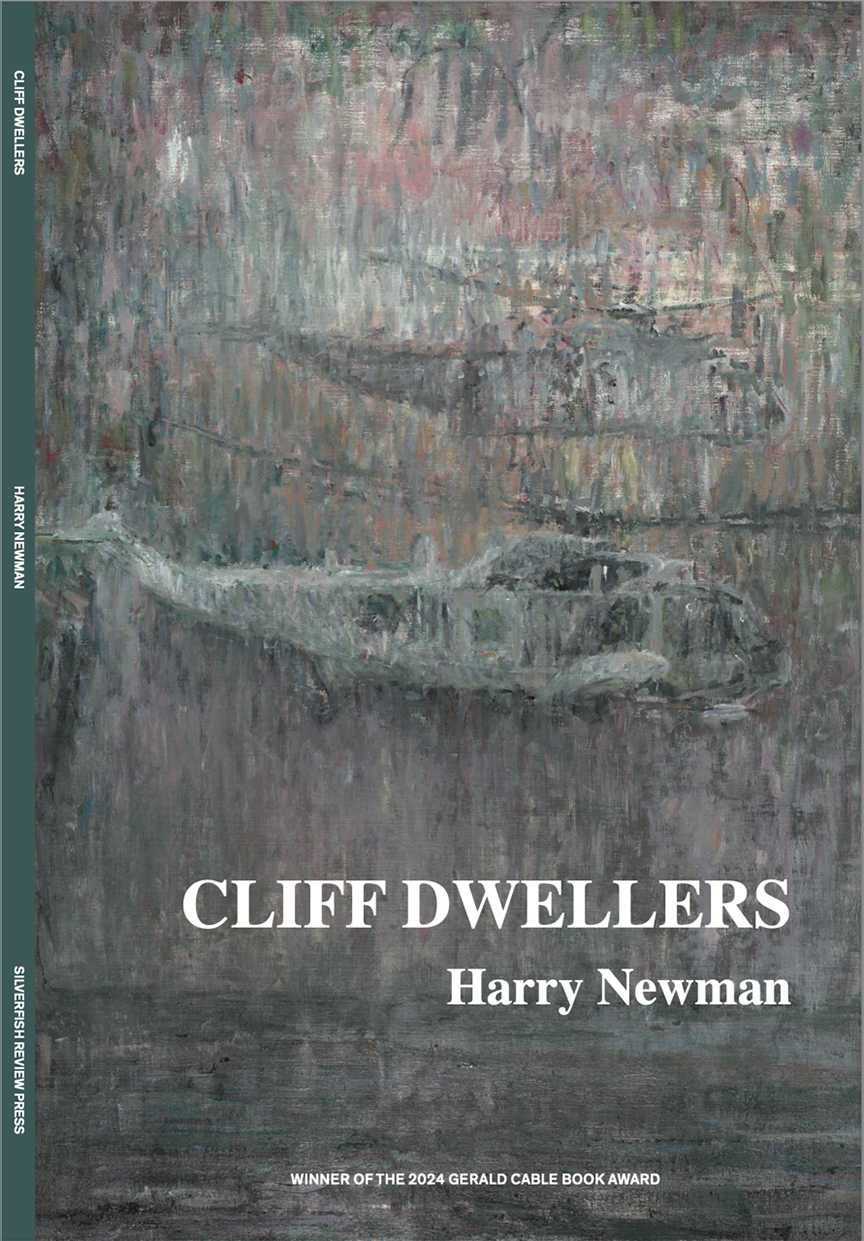
Interview with Harry Newman,

Author of “Back” (20th Anniversary Issue)

“Back” is a strange piece, feeling almost alien in its eccentricities. I quite enjoyed it, what was the inspiration behind it?

I have a several poems like “Back” that are associative in nature, that are guided by a more emotional logic than anything rationally thought out. There aren’t very many of them, but I like it when they come and try to follow those impulses wherever they lead. I’m interested in working more in that way because it’s unnerving for me.

“Back” is an older poem — it’s not been easy to find people who respond well to it — and I don’t remember its origin in much detail. I was homeless at the time I wrote it, after the end of my first marriage. Moving from couch to couch at various friends’ apartments around the city, in one place only a few days at a time. I guess it started as an effort to remind myself, a whispering in my own ear. A suggestion of direction and a hope for return.

What made you decide to become an author in the first place?

There was nothing conscious about it. I started writing at a young age, 9 or 10. First poems, then later plays. I spent my 20s and 30s working professionally in theater in New York, as a writer and translator and on the staff of theaters. Writing was just the thing I did naturally. And I always treated it professionally, just assuming it would be where I’d go. I started sending out poems to journals when I was in my teens. They always came back. Good practice for the future.

Do you have any other pieces you’re intending to release soon, or are working on?

I always have 30 or 40 poems circulating to journals at any given time. When one group gets rejected, I send it to another journal right away. I keep a list. I have a reading coming up in New York in June and I’m hoping to have a new poem or two for it. That’s what I’m working on right now. I’ve also started rehearsing for the reading. In part that’s because of my background in theater, but I can also get quite nervous when I read and like to practice aloud for a week or two before a reading. That helps me discover an order for the poems as well, a shape for the presentation as a whole.